ISO 45001 – Hierarchy of Controls (HOC) – Should it be a Requirement?

Section 8.1.2 of ISO/DIS 45001 requires that organizations “shall establish a process and determine controls for achieving reduction in OH&S risks using the following hierarchy:

  1. occupational_health_safetyeliminate the hazard
  2. substitute with less hazardous materials, processes, operations or equipment
  3. Use engineering controls
  4. use administrative controls
  5. provide and ensure use of adequate personnel protective equipment

The US Technical Advisory Group at its recent meeting in Dallas, TX Feb 22-26, 2016 had lengthy and at time heated discussion about requiring the use of the HOC.  The basic question is should the phrase “using the following hierarchy” be revised to soften it by saying “considering the following hierarchy”.

Many of the seasoned OH&S professionals in the group believe that the language should remain as “use” . They believe the HOC is well accepted in the industry and it is also required by law.  Others on the US TAG with experience in drafting and auditing ISO standards like ISO 14001 think the use of the HOC should be optional.  They maintain that it will be difficult during audits to prove that the HOC was used and that additional control is not possible or practical.

The standard also requires that the OH&S Policy “includes a commitment to control OH&S risks using the hierarchy of controls.

Give us your opinion and please take the survey.

Results of ISO 45001 US TAG Meets in Dallas, TX  – February 22-26, 2016

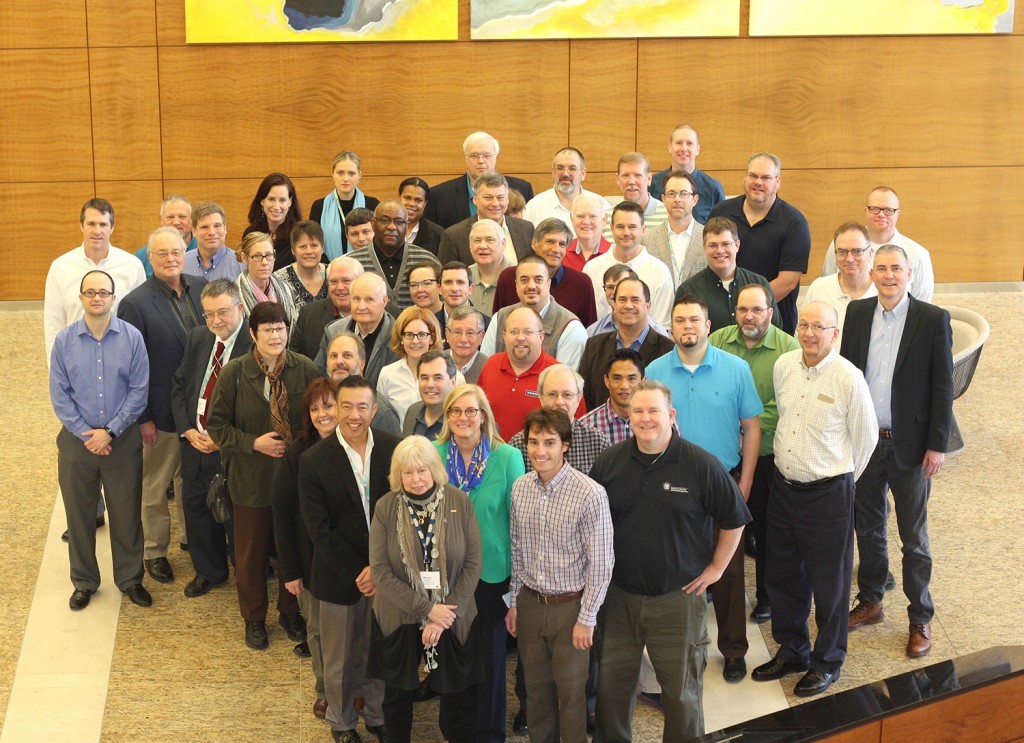
We recently participated on the leadership team for the United States Technical Advisory Group (US TAG) for the Development of the  new ISO 45001 standard for Occupational Health and Safety management systems.  Group Photo at ISN

The purpose of the week long meeting held at the ISN headquarters in Dallas, TX was to disposition over 800 comments on ISO/DIS 45001.  The US TAG successfully dispositioned all of the major issues and many of the individual comments.  Our role at this meeting was as co-chair of a subcommittee with Vic Toy for Clause 6 – Planning.  Our section had 157 comments to review and decide how they would be addressed.

The meeting was attended by about 70 participants representing business, organized labor and government.  Major issues addressed during the meeting included questions and comments like:

  • Should organizations be required to use the hierarchy of controls when reducing risk?
  • Does redundancy add clarity or confusion (frequent references to workers and worker representatives)?
  • Should organizations be required to assess risk to the management system (other risks) or is this already addressed by the clauses of the standard?
  • When must workers be asked for an opinion (consultation) and when must workers have authority to influence decisions made by management about risk control and other management system issues (participation)?

We have posted some articles about the following on our website blog if you are interested in learning more about these important issues.

  • ISO 45001 – Hierarchy of Controls
  • ISO 45001 – Other Risks and Other Opportunities

The public comment period in the USA is now open until April 1, 2016 so if you are in the USA and your organization would like to submit comments for consideration send me an email to tagosh@envcompsys.com and I can help you get the comments to the right place. Also please feel free to call or email with any questions about ISO/DIS 45001.

ISO 45001 Update – June 2015

Goole Bikes

The famous Google Bikes!

We recently participated as voting members in a meeting of the United States Technical Advisory Group (TAG) for the new ISO 45001 (Occupational Health and Safety) standard.  The meeting was held at Google Headquarters in San Francisco.  Extensive discussion took place within the TAG regarding the United States TAG position on the proposed ISO 45001 Draft Standard (CD#2).  The consensus was strong that the United States TAG believes the standard is still not ready to move to the next stage of the standards development process (DIS).  To this end, a motion was made, seconded, and unanimously approved during the course of the meeting and at a follow-up conference call.

The motion and its result were communicated in a letter to the American National Standards Institute (ANSI) on June 3. The motion was as follows:

The United States votes “No with Comments” on the draft standard with the position that the proposed standard is not yet ready to move to the DIS stage of the standards development process.

The impact of this negative vote is uncertain because the US has only a single vote on the International ISO 45001 committee (PC283) and there could be enough votes by other nations to move the standard to DIS rather than to another Committee Draft.  The US is voting that the standard go through another cycle as a Committee Draft (CD3) to allow more time to iron out some sensitive and controversial issues.

METADATA-START

When at work Googlers are never more than 100 feet from good, healthy food

Initially many of the TAG and PC members familiar with government mandated safety requirements (OSHA) were of the belief that this standard was much like a new law or labor regulation.  The good news is that the understanding of the standards development process by memberships of the US TAG and members of the International Committee is maturing which in turn has resulted in more flexibility for users of ISO 45001.  Over the last 2 years many of the membership has come to understand that allowing flexibility in how organizations choose to implement their OHSMS is key to its acceptance by potential users.

During the meeting in San Francisco we were able to talk candidly with the US TAG leadership and the belief is that a final draft of the ISO 45001 standard may not be ready until early 2017.  This will require that the PC is granted a 9 month extension to the three year project timeline that was originally approved by ISO.

TC 207 – Survey request on Verification of Environmental Sustainability Reports

652px-Logo-ISO[1]In 2011 the ISO/TC 207/SC 2 – Environmental auditing sub-committee established an ad hoc group to gather information on current developments on auditing/verification of publicly available environmental and sustainability reports. Status reports were given at the 2012 and 2013 meetings. In 2013 the ad hoc group decided to conduct a survey to gather further information on the market needs for a standard on the topic of verification of environmental sustainability reports for discussion at its upcoming meeting in Panama on May 27, 2014.

TC 207 is seeking your assistance in obtaining broad participation in this survey. The survey can be accessed via the following link:https://www.surveymonkey.com/s/RCBL6D5. The survey will be open until May 2, 2014. We understand that this is a short timeframe for capturing this information but the deadline was established by ISO to make sure responses were available in time for consideration at the Panama meeting.

To obtain a statistically diverse and representative sample we are requesting that you consider passing this survey to other experts and stakeholders that you are familiar with personally.  We are hoping to get responses from a variety of organizations, based upon their environmental risk, number of employees, size and type (small, medium, and large as well light, medium, and heavy manufacturing), as well as those in the public and/or private sector.

Day 4 – ISO 14001 EMS Lead Auditor Washington, DC, 4/10/14

Day four of ISO 14001 Lead Auditor is going well.  A great group of folks in the class makes my job here in DC enjoyable.  From time to time I wonder if ISO 14001 is destined for jettison to the ash heap of sustainability irrelevance.  I sometimes question if others will continue to believe as I do that an ISO 14001 environmental management systems is a good way to manage the plant part of sustainability’s triple bottom line.14001_0414_dc

But teaching this class often restores my confidence that ISO 14001 will continue to be relevant for the foreseeable future.  Students continue to appreciate learning the fundamentals of environmental aspects, impacts, significance, auditing including the relationship between audit criteria, evidence, findings and conclusions.   I also believe that the current revision process is tracking well toward delivering an improved model for environmental management systems and I am looking forward to teach this course for the revised standard next year.

ISO High Level Structure and EH&S Management Systems

ISO 14001 and OHSAS 18001 are undergoing significant change intended to improve these standards.  The new ISO High Level Structure will align all ISO standards along a common management systems structure and promote integration.   The recent US Technical Advisory Group meeting in Orlando, Florida was a particularly enlightening conference for us where US TAG members were able to share their ideas of the way the HLS applies to EHS management Systems.

ISO HLS & EHSMS

ISO HLS & EHSMS

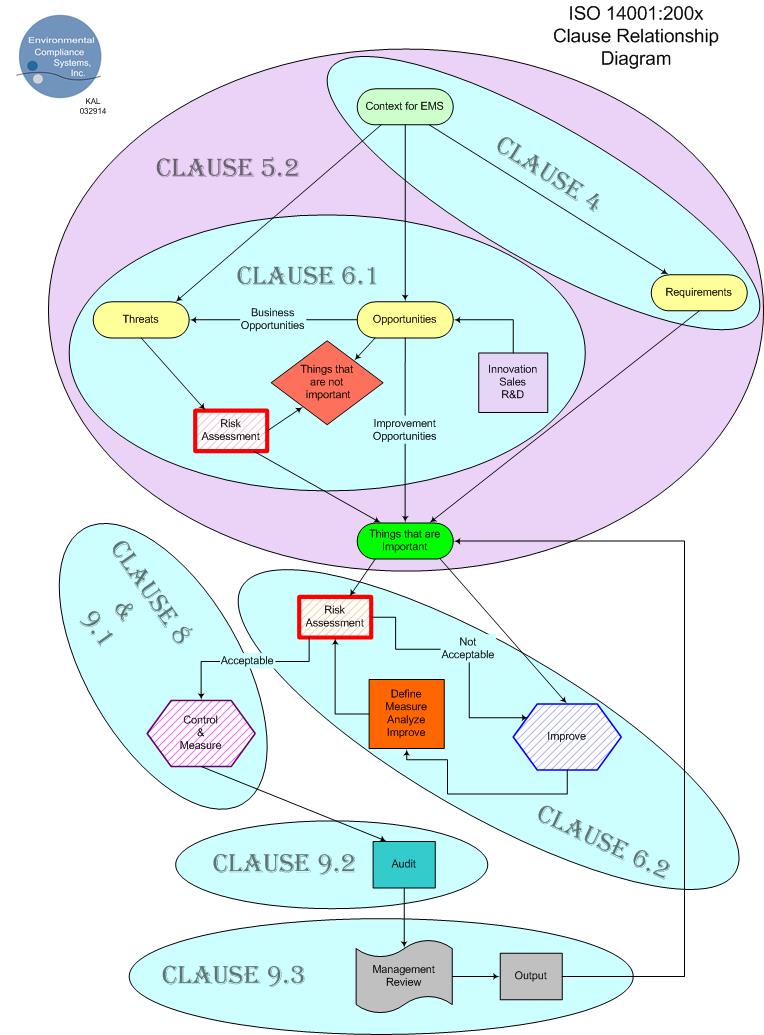
An important part of the revision processes is being able to communicate to current and new users how the standards are changing and how these changes will affect an existing EHSMS.  This diagram represents how we at ECSI see the developing changes to ISO 14001 and ISO 45001 and the relationships between some of the important clauses of the revised standards.

We are interested in understanding how users of the EHSMS standards feel about the changes and what information they need to begin to plan for the changes to their EHSMS.  ECSI will be conducting a short, one hour webinar Tuesday, April 22, 2014 from 10am-11am Central Standard Time.  The purpose of the seminar is to provide the current state of the revision process and to discuss how we see the EHSMS standard revisions progressing.  If you are interested in participating in one of these webinars send us an email to webinar@envcompsys.com and we will reply with the logon instructions.

ISO 45001 Annex 6 – Response to Comments

My draft was meant to be for the Annex only.  It was not intended to be included, or as a supplement to, the normative part of the standard.  I offered the draft of the Annex more to stimulate discussion than expecting it to be incorporated in its entirety.  As I have said from the beginning.  I believe that the HLS should remain largely intact without significant discipline specific additions.  Most discipline specific language for clarification of intent should be introduced in the Annex.

I like the idea of working the development process of this and other standards like ISO 14001 from back to front.  In other words, let’s work on the Annex (informative part of the standard) first, agree on what we want it to achieve and what the Annex should contain, and then decide what needs to be changed in the normative part of standard to meet the discipline specific outcome we want.

I also understand the desire to use much of Z10 to form the basis for ISO 45001.  However, I believe that we can improve upon the ideas presented in Z10 as we develop 45001, especially appendix F and the example risk matrix it contains.

Regarding the question of how opportunities should be addressed in the standard, I believe it matters little where opportunities are addresses.  It may be appropriate to address them in both 8 and 10 and maybe a little bit in 6.  I do however believe that we need to have a better idea about what we mean by opportunities before we add discipline specific language to the HLS in any or all of those clauses.

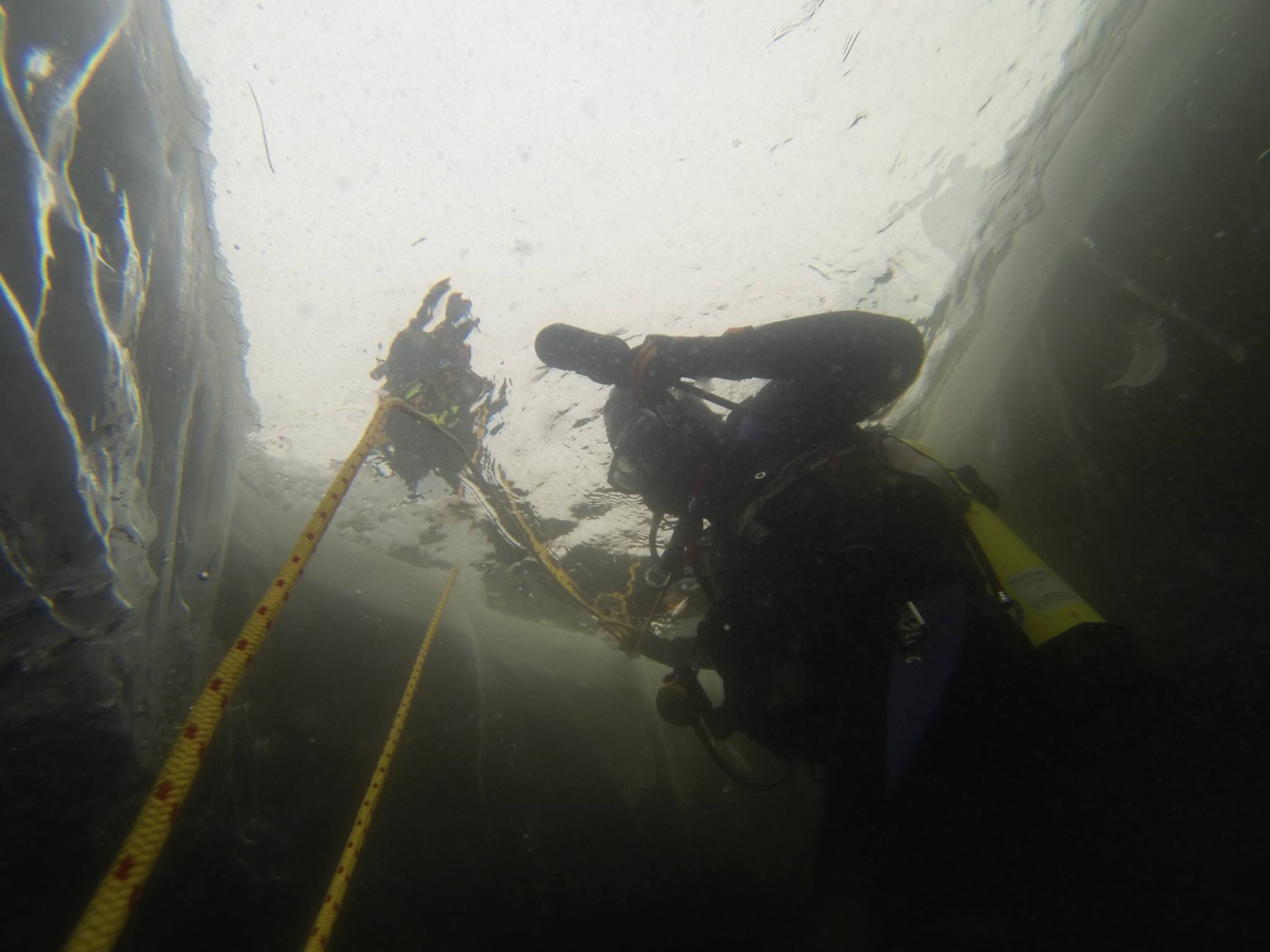
I believe there are at least two types of opportunities that can be identified, those being opportunities to reduce risk, and those opportunities that can result in other value enhancement.  Sometimes exploiting one type of opportunity comes at the expense of the other. ice3 Ice diving is a good example.  Personally I think you need to be out of your mind to do it, but some folks find great pleasure in scuba diving below the ice and take every opportunity they can to enjoy it.  One of the hazards of ice diving is getting lost under the ice and not being able to return to  the hole before your air supply is exhausted.  The bigger the hole, the easier it is to find when you want out of the water.  But cutting a big hole through 3 foot thick ice is hard and there comes a point where the discomfort in cutting the hole out weights the fun the divers expect to have on their adventure.  So the divers manage the likelihood of becoming trapped beneath the ice in other ways, like roping up and having folks at the surface holding the other end of the rope.  Managing the risks and enjoyment of an ice dive becomes an optimization problem.

The ISO 45001 standard Annex (either 6, 8 or 10) should include information to help users understand the relationship between risks and opportunities and that there are different types of opportunities they can exploit.  Once we have the right language in the annex, we can then think about what changes might be need in the standard itself to make the HLS work for the OH&S discipline.  Again this is the back to front approach to standard development I prefer.

Spring? Really?

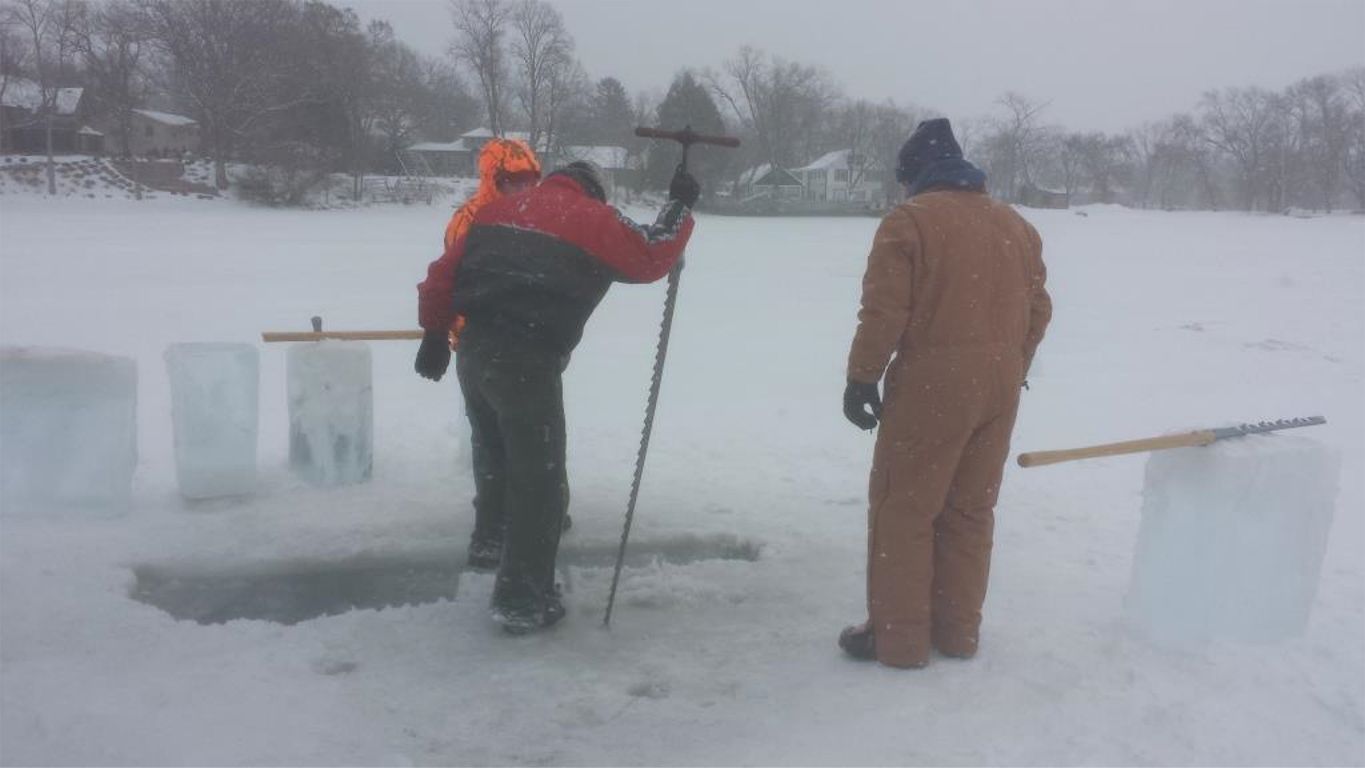
If you are living in the North Country as I am, the weather has been a perpetual topic of discussion.  Just for fun, a couple of years ago, I decided to start to learn how to harvest ice from our local lake.  Last week I got a call from some  local divers needing a hole cut in the lake to do a certification ice dive.

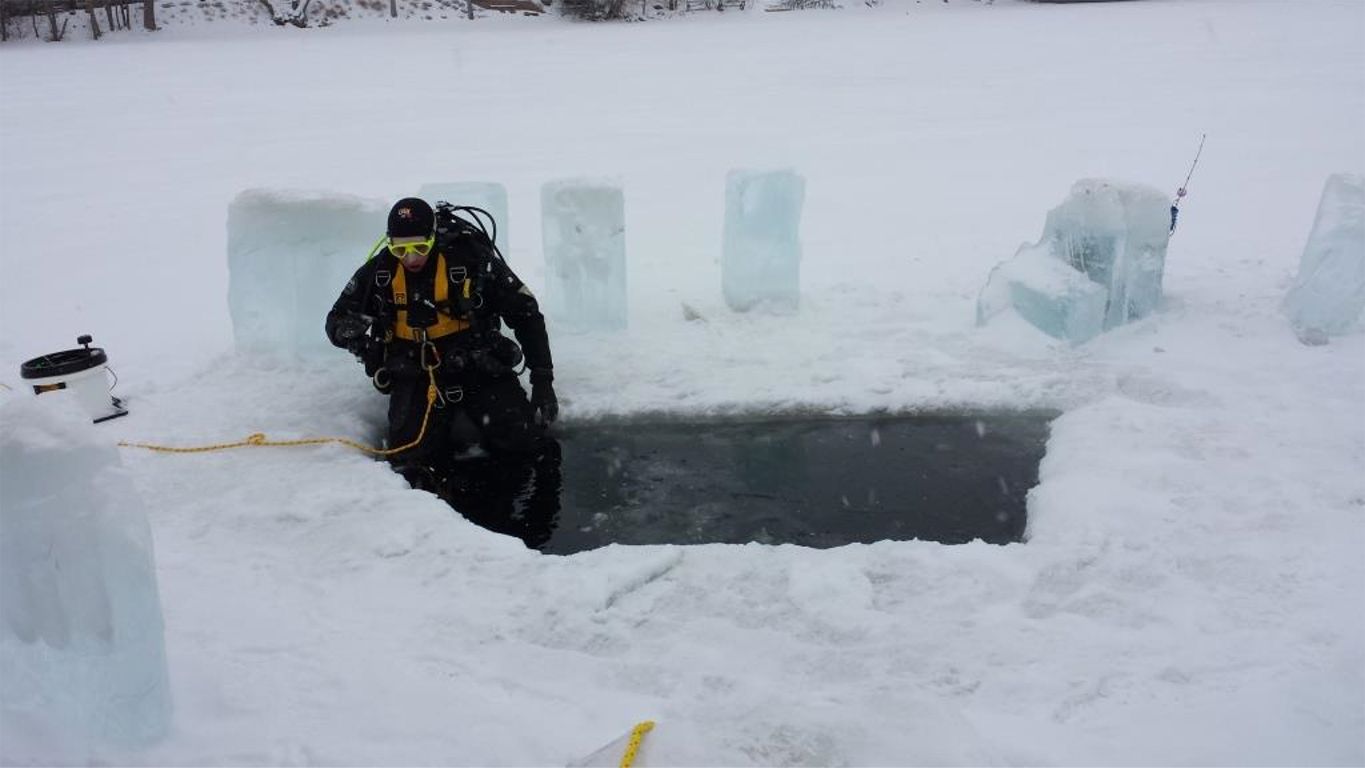
Having cut some ice earlier this year to build Ice Henge, I had an idea that cutting a hole in the ice now was not going to be easy.  20140210_165329_2It turned out that the ice on our local lake is almost 3 feet thick and it took over 3 hours to cut a 3′ x 6′ hole.  At the time they started diving the outside air temperature was about 9 degrees F and dropping.  The entire idea of ice diving offended every sensibility.  Its just not right!


32 inch bar

20140301_140300_3DCIM100GOPROice3 Ice Divers

ISO 45001 Update – Annex A Clause 6 Planning

The US Technical Advisory Group (US TAG) for the new Occupational Health and Safety Management System Standard ISO 45001 met in Washington DC in late January which we attended as voting members.  The objective of the meeting was to review the first working draft of the new standard and provide comments on the US position.  The area of greatest interest was Clause 6 Planning where discussion centered on how best to address the concept of hazard identification, risk assessment and risk treatment (control).  A key question discussed was how much discipline specific information should be inserted into the High Level Structure (HLS), the normative part of the standard, and how much should be presented in the Annex (the informative part of the standard).

My opinion is that the requirements part of the HLS should be left mostly as it is with only little additional discipline specific (OH&S) information being added.  Additional discipline specific information should be placed in the Annex as informative interpretation and guidance on how to use the standard.

As the DC meeting concluded several members of the group offered to prepare the Annex portion of the standard to be presented in Morocco next month at the international meeting of the full ISO 45001 Project Committee.

ECSI prepared a proposed Annex A section for the standard which was based partially on other international and national standards like ISO 31000:2009 – Risk Management, ISO 31010:2009 Risk Assessment, OHSAS 18001:2007 and ANSI Z10:2012.

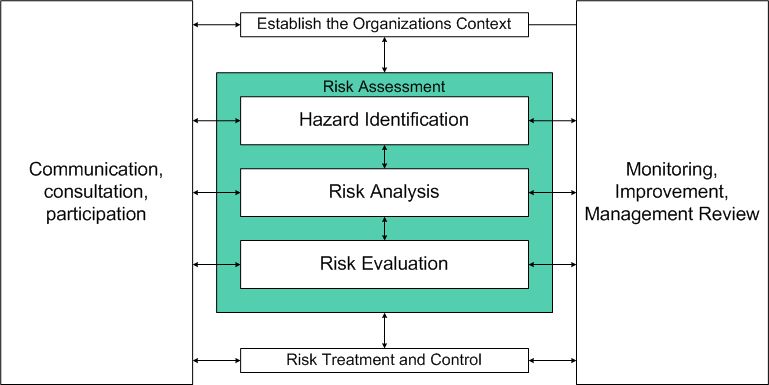
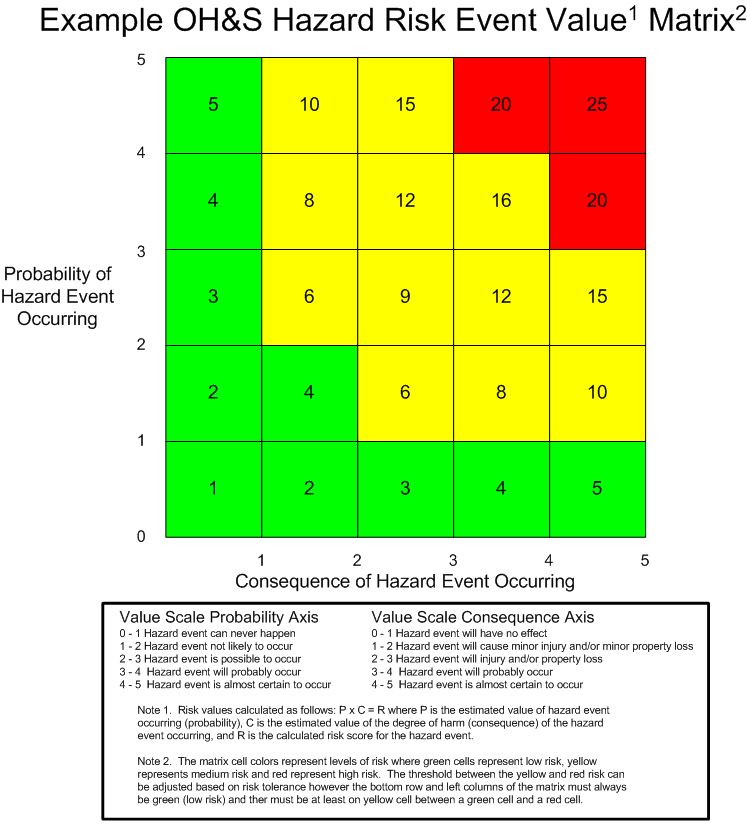
Here is one of the figures we introduces to explain the relationship between the various parts of ISO 45001 and the risk assessment process.

Risk Assessment Parts 8x8

The Annex we prepared explained the different steps in the risk assessment process and also included a figure that could be used to explain the concept of Risk Analysis (Figure A6-2).  The information we provided was combined with information offered by others on the US TAG.  The proposed annex will be presented by the US TAG next month in Morocco. Now we just need to sit back and see what the rest of the international ISO 45001 Project Committee thinks about the US proposal for Annex A clause 6. .

Risk Assessment Matrix

OHSAS 18001 and ISO 45001 – ISO Health and Safety Management Systems

In late October 2013 ISO (International Organization for Standardization) decided to move forward with the development of an ISO standard that will replace OHSAS 18001 Occupational health and safety management systems – Requirements (British Standard Institute) within the next three years.  The ISO Occupational Health and Safety Management System Standard (OHSMS) is expected to be issued under the number ISO 45001.   The exact title is still up in the air but will be similar to something like Occupational health and safety management systems – Requirements with guidance for use.   The first Working Draft of the new OHSMS standard is expected to be circulated to the US Technical Advisory Group (U.S. TAG) members within the next few weeks. 

Important issues that will be discussed early in the standard development process are:

Defining the term “persons under the control of the organization”. 

There will be discussion about how much flexibility organizations will have when defining the scope of its OHSMS under the ISO 45001 requirements.  This issue will have a significant impact on organizations who have chosen to shift OH&S risks to onsite contractors’ through contracts that require the contractors to assume some or all responsibly for their employees health and safety and for compliance with all regulatory requirements.   The questions will likely boil down to will the standard allow a complicated scope statement that excludes substantial portions of the facility’s physical location thereby excluding many contractors from the scope of the OHSMS,  or will the standard discourage this type of scoping in favor of a more inclusive approach to the scope of the OHSMS. 

Questions about acceptable levels of risk shifting or sharing will need to be discussed  and answered.

Hazard Identification, Risk Assessment and Risk Control

This will be an important topic of discussion and deliberation with the U.S. TAG to reach consensus on what the standard will require of organizations to develop, implement and maintain a process for performing hazard identification and risk assessment.   There are many approaches to risk assessment and it will be interesting to see how detailed the requirements will be regarding this important area of an OHSMS.  Appendix F of ANSI Z10 will be a starting point for the U.S. TAG for developing the guidance on this important OHSMS topic.

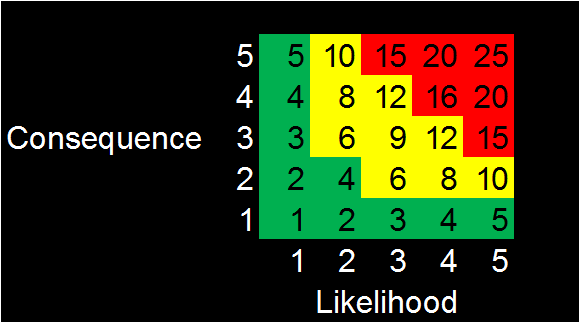
The new structure required by ISO (Annex SL) places emphasis on the concept of risk management.   OHSAS 18001 emphasized this aspect of an OHSMS but you can expect more in the way of guidance in ISO 45001 describing appropriate methods for assessing OH&S risks.   The guidance will be in the annex of the ISO 45001 standard with examples of how to perform an OH&S risk assessment and there will likely be a figure that looks something like the figure below where risk is estimated based on multiplying the likelihood value by the consequence value to arrive at the risk score.
 risk score 112113


Time Frame for ISO 45001 Development

Here is the current schedule for required 3 year development of the standard that was provide to TAG members on November 15, 2013.

  • Dec 2013 –Working Draft 1 (WD1) circulated Working Group 1 (WG1)
  • Jan 2014 – Submit Comments on WD1
  • Jan 2014 – US TAG Face to Face Meeting (to develop US positions/concerns on WD1) – ECSI will attend this meeting.
  • March 2014 – PC Meeting – Development of Committee Draft 1 (CD1)
  • November 2014 – PC Meeting – Development of Draft International Standard (DIS)
  • November 2015 –PC Meeting – Development of Final Draft International Standard (FDIS)
  • October 2016 – Publish ISO 45001

ECSI is a voting member of the U.S. Technical Advisory Group to ISO 45001 and will be directly involved in developing the US position on the content of this important standard.  We will be publishing updates on the progress of ISO 45001 and are happy to discuss any ideas, issues or concerns you have with the development of this new standard or any other OH&S issues you would like to discuss.  Don’t be shy.  You can either post a comment / question here or contact us directly at 920-648-4134 or email us kalehner@envcompsys.com.